







By using our website, you agree to the use of cookies as described in our Cookie Policy
How Can Seniors Get Around DC Without a Car?
Most people assume mobility in DC means owning a vehicle. Wrong. The city's built for transit, and seniors who know the system have more options than drivers stuck circling for parking. Between subsidized rail passes, specialized shuttles, and app-based rides that show up in minutes, getting across town without keys in your pocket is easier than most realize. The trick is knowing which service fits which trip — and not wasting time on routes that don't work.
So here's what matters. If you're navigating DC as an older adult, accessibility isn't a bonus feature. It's standard. Every mode of transit we're covering has been tested by thousands of seniors who've ditched their cars and kept their independence. No guesswork. No dead ends. Just real ways to move through the district without paying insurance, gas, or garage fees.
The Metro System Works When You Use It Right
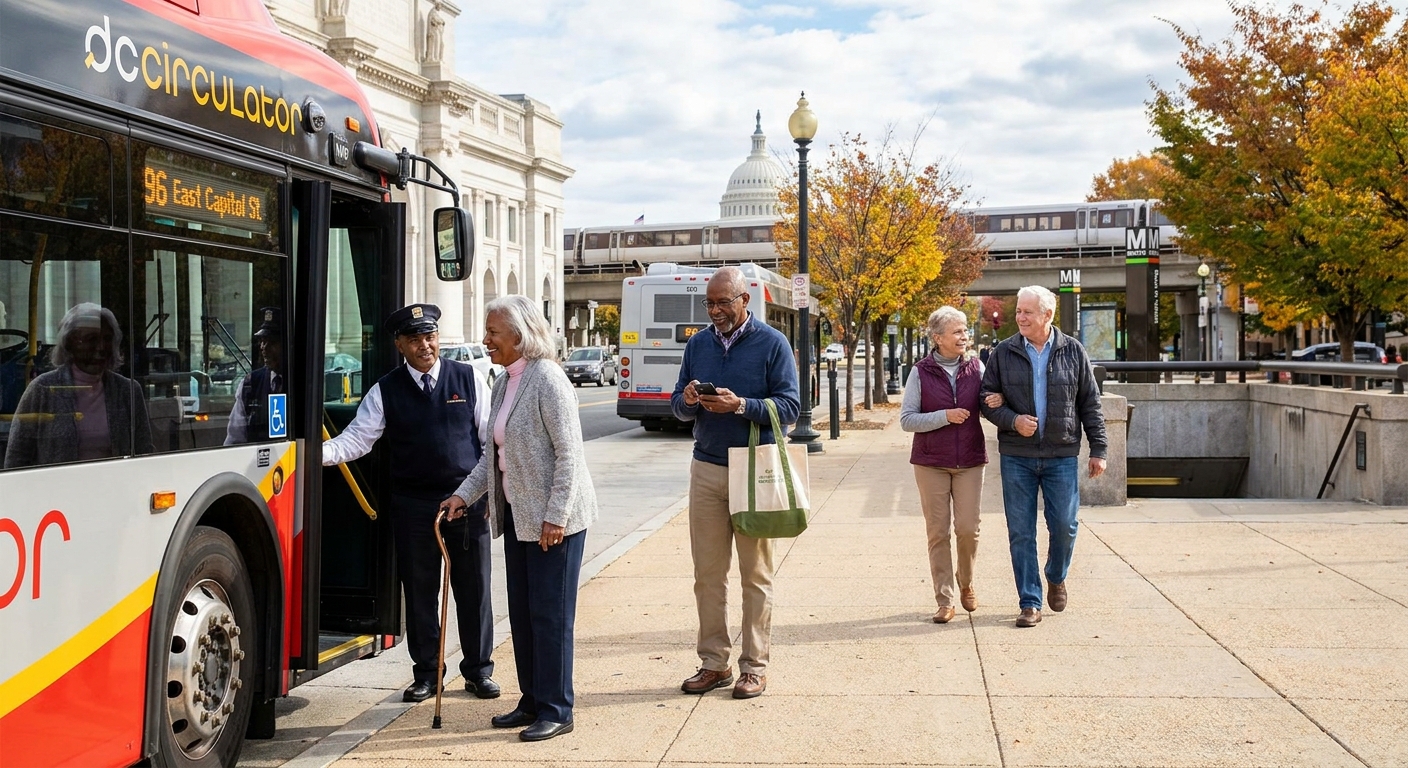
Metrorail and Metrobus cover nearly every corner of the district and stretch into Maryland and Virginia. Seniors over 65 get half-price fares with a Senior SmarTrip card — swipe it once, and the discount applies automatically. No fumbling with cash or proving your age every ride. Every station has elevators, and buses come equipped with lifts and priority seating up front.
The rail lines run clean routes between major neighborhoods, museums, and medical centers. Buses fill in the gaps, especially in areas where trains don't reach. If you're heading to an appointment in Foggy Bottom or meeting friends in Adams Morgan, the Metro gets you there without transfers or complicated schedules. Just check the timing during off-peak hours — trains slow down midday, but they're also less crowded.
Circulator Buses Keep It Simple
The DC Circulator runs shorter loops connecting high-traffic spots like Georgetown, Union Station, and the National Mall. Fares are low, routes are straightforward, and buses show up frequently enough that you don't need to memorize a timetable. Seniors ride at a discount, and every vehicle handles wheelchairs without hassle.
This service shines when you're covering a few miles between landmarks or errands. It's not built for cross-city hauls, but for quick hops between neighborhoods or tourist zones, it beats waiting on a longer Metro connection. Buses are marked clearly, stops are well-lit, and drivers expect passengers who need a minute to board.
Specialized Services Designed for Seniors
The Seabury Connector and Transport DC exist specifically for older residents who need reliable, affordable rides. Seabury offers free or low-cost trips to medical appointments, grocery stores, and senior centers for those who qualify. Transport DC provides curb-to-curb taxi service around the clock, seven days a week, at rates far below standard cab fares.
Both programs require some planning — you'll need to schedule rides in advance, especially during busy hours — but they eliminate the stress of navigating public transit when you're carrying bags or dealing with mobility aids. Drivers are trained to assist passengers, and the service is built around seniors' schedules, not the other way around.
Rideshares and Taxis Show Up Fast
Uber and Lyft operate throughout DC with features that make them senior-friendly. You can schedule rides ahead of time, request vehicles with extra space, and track your driver's arrival in real time. Traditional taxis still line up at hotels, airports, and busy intersections, and many offer phone dispatch or app booking. Some companies provide discounts for older riders or vehicles designed for wheelchair access.
The advantage here is flexibility. No fixed routes, no waiting at stops. If you're heading somewhere off the Metro grid or need door-to-door service after dark, rideshares and cabs fill that gap. Just compare prices before you confirm — surge pricing during rush hour can spike costs quickly.
Walking and Biking Still Matter
DC ranks as one of the most walkable cities in the country. Sidewalks are wide, intersections have clear signals, and benches appear every few blocks. Many neighborhoods pack restaurants, shops, and parks within a half-mile radius, making errands manageable on foot. For seniors who want a little more speed, Capital Bikeshare offers electric-assist bikes that handle hills without breaking a sweat.
Biking isn't for everyone, but the infrastructure supports it. Protected lanes run along major streets, and bike stations sit near Metro stops and community centers. If you're comfortable on two wheels, it's a free way to cover ground between transit connections or explore areas where buses run infrequently.
Community Shuttles Run Quiet Routes
Senior centers and nonprofit groups operate shuttle services for group outings, shopping trips, and medical appointments. These programs are usually free or donation-based, and they create a social element that public transit lacks. You're riding with neighbors, not strangers. Drivers know the regulars, and trips are scheduled around participants' needs.
Check with the DC Office on Aging or your local senior center to see what's available in your area. Some shuttles run daily, others weekly. They won't replace a full transit plan, but they're a solid supplement when you need a ride and prefer familiar faces.
What You Should Carry Every Trip
Preparation prevents problems. Keep your SmarTrip card loaded, your phone charged, and emergency contacts saved where you can reach them. If you're walking, use crosswalks and wait for signals — DC drivers move fast. On the Metro, don't hesitate to ask station managers for help. They're trained to assist seniors and riders with disabilities, and they'd rather answer questions than watch someone struggle.
A few more basics:
- Plan routes before you leave home using WMATA's trip planner or Google Maps
- Travel during mid-morning or early afternoon to avoid rush-hour crowds
- Carry small bills or a backup payment method in case card readers malfunction
- Wear comfortable shoes if you're combining walking with transit
- Bring a foldable seat cushion if you're riding buses with hard benches
The Real Advantage Is Freedom
Ditching a car doesn't mean losing independence. It means reclaiming time spent on maintenance, parking headaches, and insurance renewals. Seniors who master DC's transit options move through the city with less stress and lower costs than drivers circling for a spot. The infrastructure exists. The discounts are real. And the support network — from accessible vehicles to senior-specific services — is stronger than most people realize.
We've watched thousands of older adults navigate DC without keys, and the pattern is clear. The ones who thrive are the ones who plan ahead, use the right tool for each trip, and don't assume public transit is intimidating just because it's unfamiliar. For events, corporate transportation, or group trips in the DC area, professional charter bus services can handle larger transportation needs with comfort and reliability. Every service we've covered is designed to keep you moving, connected, and in control. Use them.
Let’s Make Your Next Ride Effortless
We believe every senior deserves the freedom to explore DC without the hassle of driving. If you’re ready to simplify your transportation or need help planning the best routes, let’s talk about how we can make your trips smoother and more enjoyable. Give us a call at 844-870-4517 or get your free quote today and see how easy getting around can be.
‹ Back
Recent Posts
-
When Does a Passenger Van in DC Make Sense?
October 20, 2026
-

Making Corporate Transportation in DC Easier for Busy Workdays
October 6, 2026
-
Choosing a Charter Bus in DC for Large Group Outings
September 22, 2026
-
How Can Seniors Get Around DC Without a Car?
September 8, 2026
-
What Is the Best Transportation in Washington DC?
August 25, 2026