





By using our website, you agree to the use of cookies as described in our Cookie Policy
Coordinating Multi-Stop Hotel Routes for Conferences in Washington DC
Conference planners in DC deal with a logistical puzzle most cities don't face. Attendees scattered across five hotels. Sessions split between the convention center and three satellite venues. Networking dinners downtown while half the group is staying near Dupont Circle. The Metro helps, but it doesn't solve everything. And when you're moving hundreds of people on a tight schedule, hoping everyone figures it out on their own is a recipe for chaos.
The difference between a smooth conference and a logistical nightmare often comes down to how well you coordinate transportation. Miss a shuttle window, and you've got fifty people late to a keynote. Underestimate traffic on Constitution Avenue at 8 a.m., and your entire morning session starts behind schedule. We've seen it happen. The fix isn't complicated, but it does require planning that goes deeper than dropping pins on a map.
Distance Means Nothing Without Context
Two hotels might be a mile apart on paper. In DC traffic, that's twenty minutes if you're lucky. Rush hour? Double it. Add in road closures for motorcades, construction on K Street, or a protest near the White House, and your route just became a guessing game. Real-time traffic data helps, but only if you're checking it constantly and adjusting on the fly.
Proximity to Metro stations matters too. Some hotels sit right on top of a Red Line stop. Others require a ten-minute walk through neighborhoods that aren't conference-friendly at 7 a.m. If your attendees are relying on public transit as a backup, make sure they know what they're walking into. Not every route is created equal, and not every attendee is comfortable navigating an unfamiliar city alone.
Shuttle Timing Can Make or Break Your Day
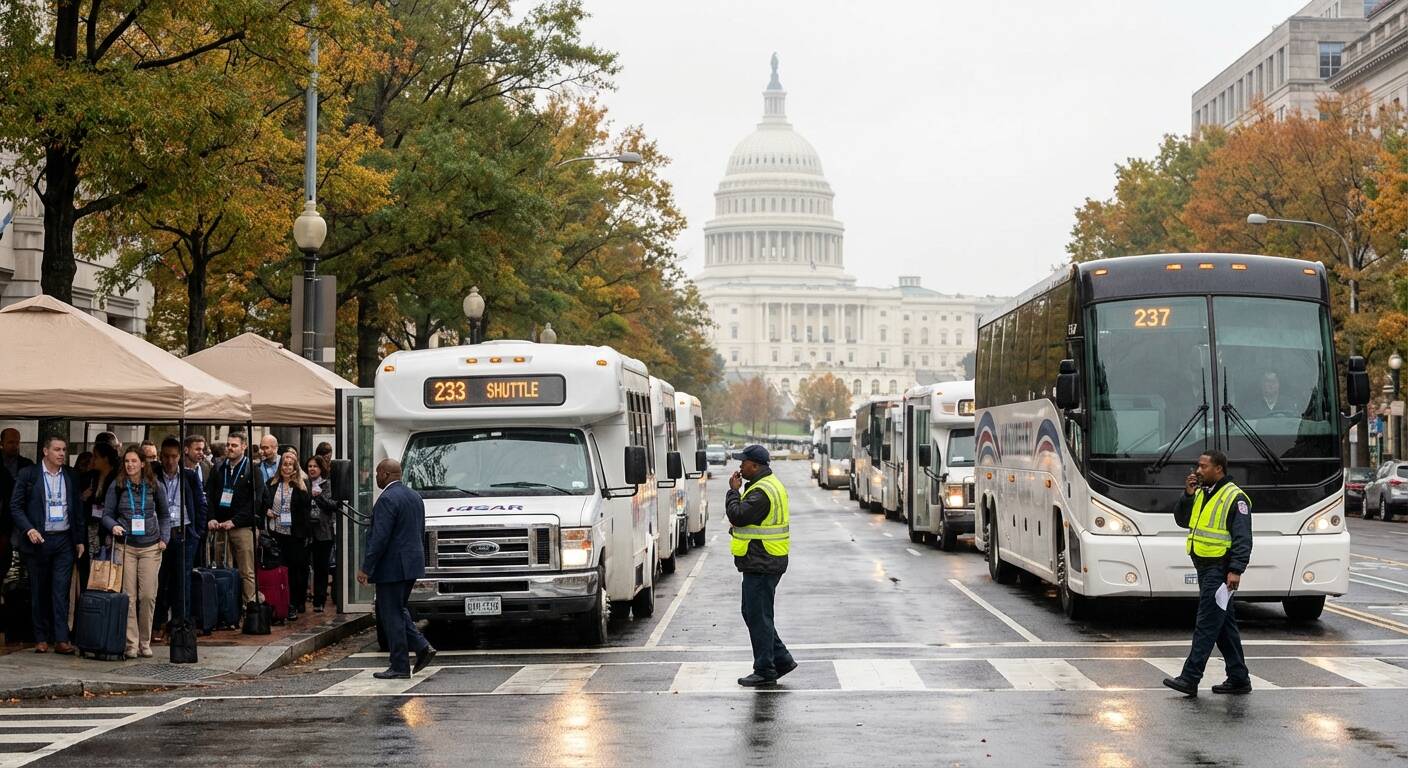
Fixed schedules work when attendance is predictable. On-demand shuttles work when you've got the budget and the staff to manage them. Most conferences end up somewhere in between, running loops with enough frequency to cover peak times without burning through their transportation budget by noon.
Here's what actually moves people efficiently:
- Shuttles departing every fifteen minutes during session transitions
- Dedicated routes for high-traffic stops like the convention center
- Express shuttles that skip secondary hotels during peak hours
- Clear signage at every pickup point with next departure times
- Backup vehicles on standby for overflow or breakdowns
Accessibility Isn't an Afterthought
Standard shuttles don't work for everyone. Wheelchair users need lifts or ramps. Attendees with mobility issues need extra time to board. Visually impaired participants need audible announcements and staff assistance. If your transportation plan doesn't account for this from the start, you're not just inconveniencing people—you're excluding them.
ADA-compliant vehicles should be part of your core fleet, not something you scramble to arrange when someone requests accommodation. And if you're using rideshare services as a supplement, make sure those options include accessible vehicles too. The law requires it. Basic decency demands it.
Communication Gaps Cost You Credibility
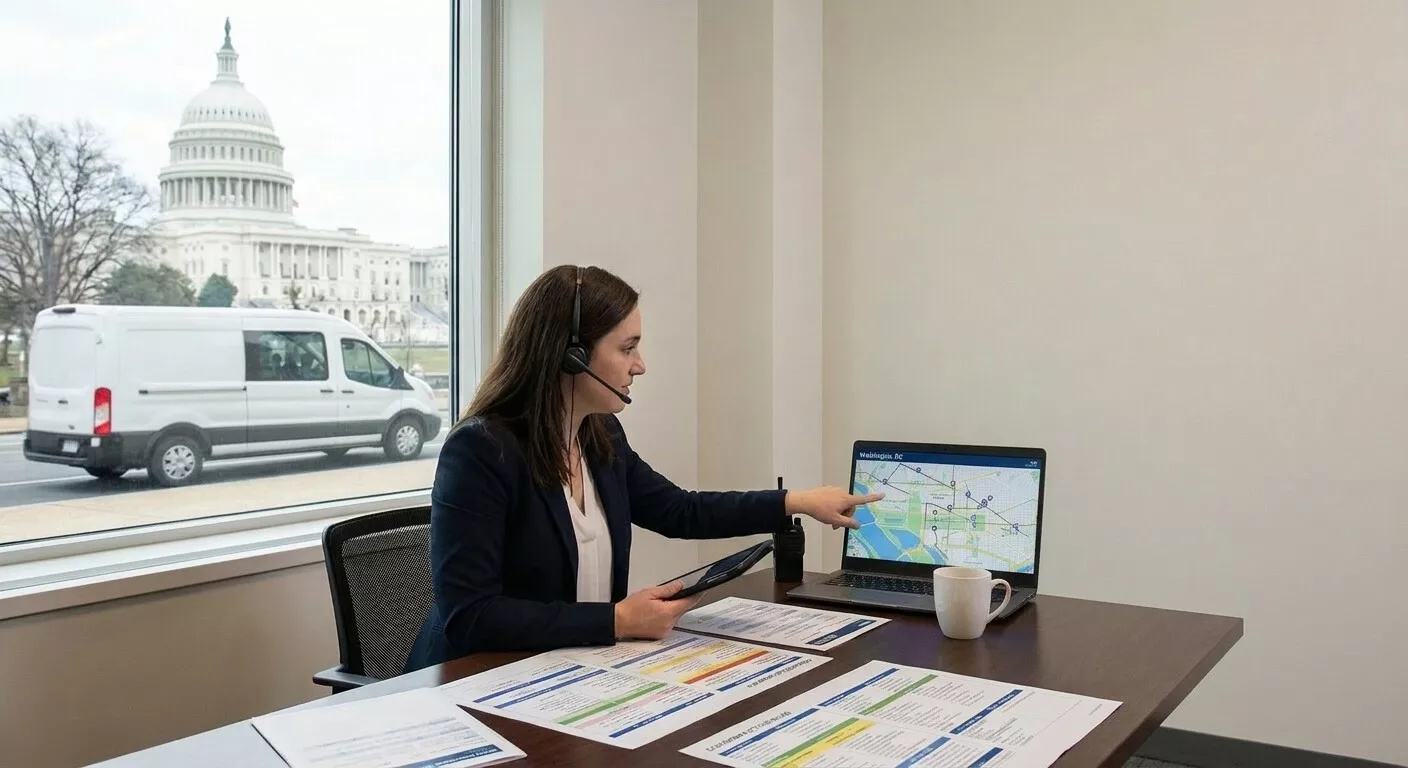
Attendees won't check their email for shuttle updates. They won't dig through the conference app for a PDF schedule. They need information where they are, when they need it. That means printed schedules at hotel front desks. Digital displays in lobbies showing next departure times. Staff at pickup points who can answer questions without pulling out their phone to check.
Push notifications work if your app is set up right. Text alerts work better. But nothing beats a human being who knows the schedule and can make a judgment call when something goes sideways. Assign someone to each major hotel during peak hours. Give them a radio and the authority to call for backup shuttles when lines get long.
Route Optimization Requires More Than Guesswork
You can't just draw a circle on a map and call it a route. Efficient transportation means understanding where your attendees are staying, which sessions they're attending, and how to sequence stops so you're not backtracking across the city. Software helps with this, but only if you feed it accurate data.
Here's what goes into a smart route:
- Hotel occupancy numbers broken down by night
- Session attendance estimates based on registration data
- Traffic pattern analysis for each time block
- Backup routes that avoid known bottlenecks
- Coordination with venue loading zones and parking restrictions
Staggered Departures Prevent Bottlenecks
Everyone wants to leave at the same time. Morning sessions start at 9 a.m., so every hotel lobby is packed at 8:30. Lunch break hits, and suddenly you've got three hundred people trying to get back to their rooms. If your shuttles all depart on the hour, you're creating your own problem.
Stagger departures by five or ten minutes. Run shuttles from high-occupancy hotels more frequently. Communicate departure times clearly so attendees can plan around them instead of showing up and hoping. It's not glamorous work, but it's the difference between smooth operations and a lobby full of frustrated conference-goers.
On-Site Staff Keep Things Moving
A shuttle schedule is only as good as the people managing it. Assign staff or volunteers to each pickup point during peak times. Their job isn't just to check people onto shuttles—it's to manage flow, answer questions, and radio for backup when needed.
These are the people who notice when a shuttle is running late and can update waiting attendees. They're the ones who spot accessibility needs and make sure the right vehicle is called. They're your eyes on the ground, and without them, even the best plan falls apart under real-world conditions.
Technology Fills the Gaps
Conference apps can do more than display a schedule. Real-time shuttle tracking shows attendees exactly where their ride is. Push notifications alert them to delays or route changes. Interactive maps help them navigate between hotels and venues without getting lost.
But technology only works if it's reliable. Test your app under load before the conference starts. Make sure GPS tracking updates frequently enough to be useful. Have a backup communication plan for when the Wi-Fi at a hotel goes down or the app crashes. Because it will.
Popular DC Venues Create Predictable Patterns
The Walter E. Washington Convention Center anchors most large conferences. Marriott Marquis, Grand Hyatt, Renaissance Downtown, and the Washington Hilton are常用 overflow hotels. If you're coordinating routes between these properties, you're working with known distances and traffic patterns.
That familiarity helps, but it doesn't eliminate the need for planning. These hotels sit in different neighborhoods with different transit access. The Hilton is up near Adams Morgan. The Marriott Marquis is right downtown. The convention center has its own traffic flow issues depending on what else is happening in the city that week. Know your venues. Know the routes between them. And know what can go wrong.
Sustainability Matters to Attendees
Conferences generate a lot of carbon emissions. Transportation is a big part of that. Optimizing routes reduces fuel consumption. Using larger charter buses instead of multiple smaller ones cuts down on trips. Encouraging group transportation for conference attendees over individual rideshares makes a measurable difference.
Some attendees care deeply about this. Others don't think about it at all. But as an organizer, you have the ability to make choices that reduce environmental impact without sacrificing efficiency. Fuel-efficient shuttles. Consolidated routes. Clear communication that encourages shared transportation. It's not just good for the planet—it's good logistics.
Planning Starts Before Contracts Are Signed
Transportation logistics should influence which hotels you book, not the other way around. If you're spreading attendees across properties that are twenty minutes apart in opposite directions, you've just made your job exponentially harder. Cluster hotels when possible. Prioritize properties near the main venue. Negotiate shuttle access and loading zone permissions before you commit.
Early planning also gives you leverage with corporate transportation providers. Book vehicles months in advance and you'll get better rates and guaranteed availability. Wait until six weeks before the conference and you're taking whatever's left. Which might not be enough.
Execution Beats Perfect Planning
No route plan survives first contact with a thousand conference attendees. Traffic will be worse than expected. A shuttle will break down. Someone will miss their ride and need a backup option. The difference between a disaster and a minor inconvenience is how quickly you adapt.
Have backup mini-bus vehicles on call. Empower your on-site staff to make decisions without waiting for approval. Monitor routes in real time and adjust as needed. And when something goes wrong—because it will—communicate clearly and fix it fast. Attendees remember how you handled problems, not whether everything went perfectly.
Getting It Right Means Getting It Done
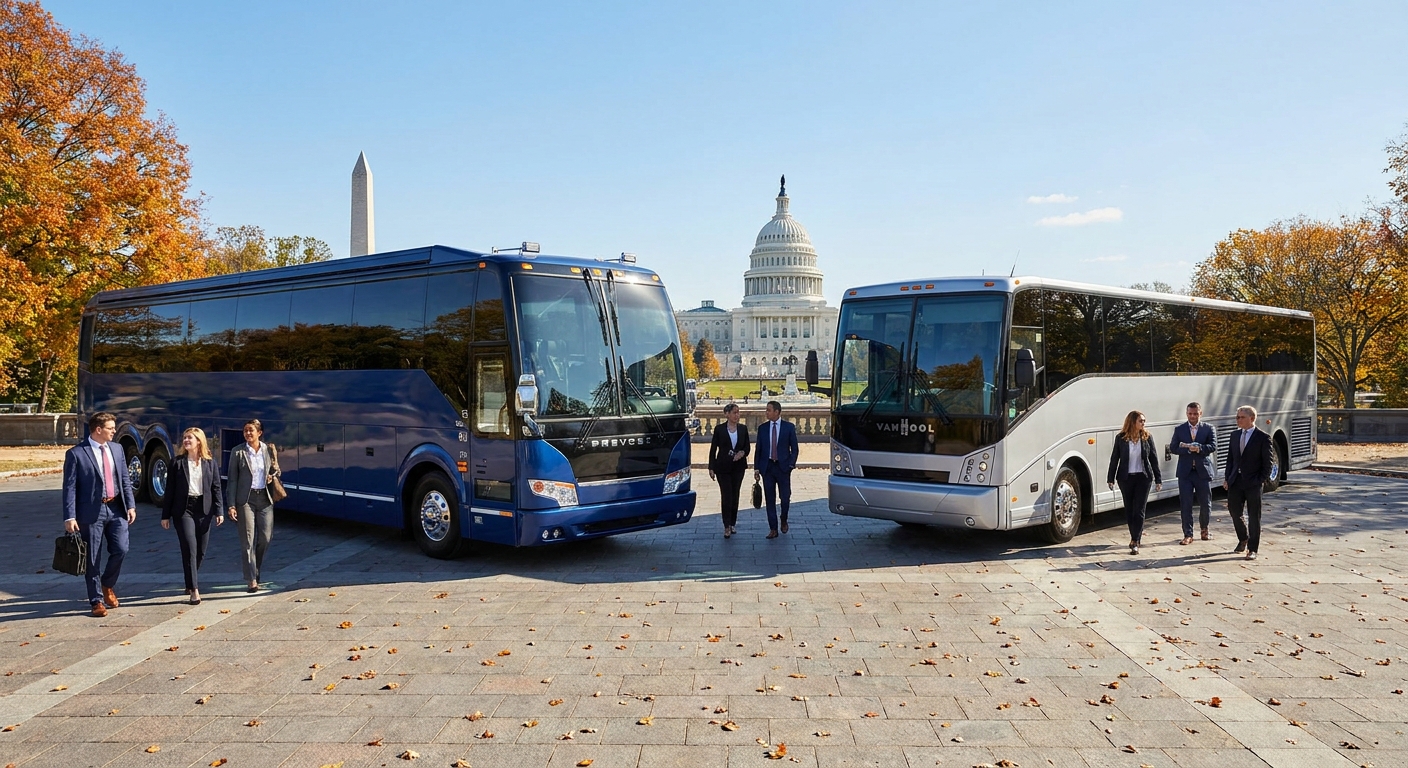
Coordinating multi-stop hotel routes in DC isn't about finding the perfect solution. It's about building a system that works under pressure, adapts to changing conditions, and keeps people moving. The conferences that run smoothly aren't the ones with the fanciest apps or the biggest shuttle fleet. They're the ones where someone thought through every detail, planned for contingencies, and put people on the ground who could execute when it mattered. For professional event transportation services, working with experienced providers who understand government and corporate travel coordination makes all the difference. That's what separates a logistical headache from a conference people actually want to attend again.
Let’s Make Your Conference Move Seamlessly
We know how much is riding on flawless transportation when you’re managing a major DC conference. Our team is ready to help you map out every detail, anticipate the unexpected, and keep your attendees moving on time. Let’s take the stress out of your next event—call us at 844-870-4517 or get your free quote and see how smooth your conference logistics can be.
‹ Back
Recent Posts
-
Choosing a Charter Bus in DC for Large Group Outings
September 22, 2026
-
How Can Seniors Get Around DC Without a Car?
September 8, 2026
-
What Is the Best Transportation in Washington DC?
August 25, 2026
-
-
Which Luxury Bus Is Best?
July 28, 2026