







By using our website, you agree to the use of cookies as described in our Cookie Policy
Keeping Construction Crews Moving With Transportation in DC
Washington, DC doesn't stop building. Streets get ripped up, monuments get renovated, and new high-rises push through the skyline every year. But none of that happens without crews who can actually show up on time. And in a city where traffic is a nightmare and parking is scarce, getting your people from point A to point B is more than logistics — it's survival. Miss the window, and you're behind schedule. Behind schedule means overruns. Overruns mean trouble.
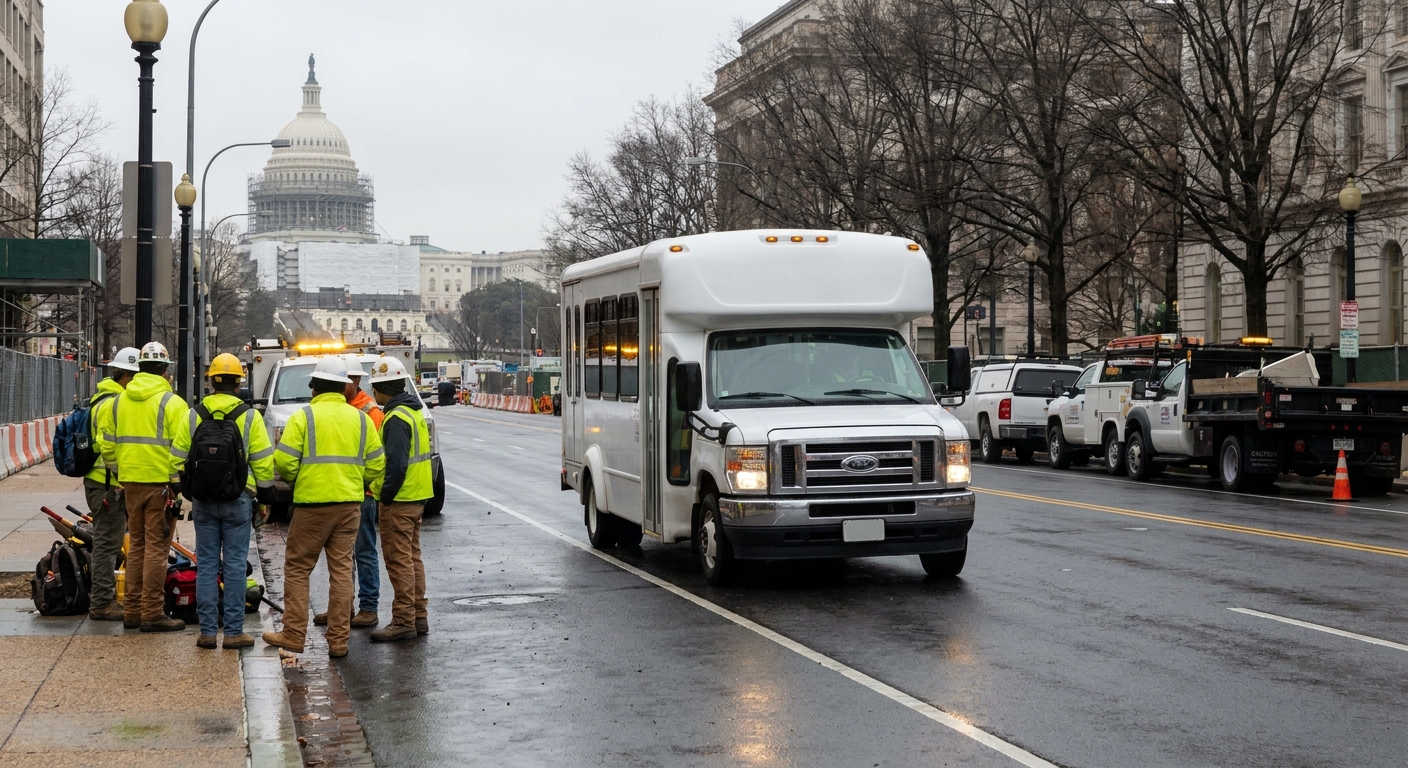
So we don't treat transportation like an afterthought. We treat it like infrastructure. Because if your crew can't reach the site, the site doesn't move.
Traffic and Access Will Eat Your Schedule
DC is dense, crowded, and constantly shifting. Road closures happen without warning. Parking spots vanish overnight. Commuters flood the corridors at the exact time your team needs to roll in. And if your job site sits anywhere near the Capitol or a federal building, good luck navigating the checkpoints and restricted zones.
Public transit sounds great on paper — until you realize most construction starts before the first train runs. Or your site is miles from the nearest Metro station. Or your crew needs to haul gear that won't fit on a bus. The math stops working fast, and that's when projects start bleeding time.
Private Shuttles Cut Through the Chaos
We've seen crews lose hours every week just trying to get to work. That's why dedicated shuttle services make sense. You set up central pickup points — park-and-ride lots, transit hubs, wherever your people are — and you run a direct line to the site. No detours. No guesswork. Everyone arrives together, on time, ready to work.
Shuttles also mean fewer headaches. Your crew doesn't burn gas hunting for parking or stress about being late because of an accident on the beltway. Morale goes up. Absenteeism drops. And you're not dealing with a scattered team that trickles in over two hours.
- Fixed routes tailored to your project location
- Flexible schedules that adjust for shift changes or overtime
- Reduced environmental impact from fewer individual vehicles
- Better punctuality and team cohesion
- Lower parking and fuel costs across the board
Metro and Buses Work When You Work With Them
DC's public transit system is solid — when it aligns with your schedule. If you're running standard hours and your site is near a station, we'll take advantage of it. Transit passes, coordinated shift times, and partnerships with local authorities can all help get workers moving without adding company vehicles to the mix.
But let's be real. Not every site is Metro-accessible. Not every shift starts at 9 a.m. And not every worker wants to haul tools through three platform changes. Public transit is part of the solution, not the whole thing. When it works, we use it. When it doesn't, we pivot.
- Discounted or employer-sponsored transit passes
- Schedules aligned with train and bus timetables
- Partnerships with WMATA for special services
- Hybrid approaches combining Metro with shuttle pickups
- Reduced reliance on personal vehicles
Carpools Still Get the Job Done
Sometimes the simplest answer is the best one. Organize your crew into carpools based on where they live, and suddenly you've got fewer cars on the road and more coordination across the team. Rideshare apps make it easier to match drivers and passengers, and a little incentive — gas cards, preferred parking, a bonus for consistent participation — goes a long way.
Carpooling also builds rapport. When your people ride together, they talk. They plan. They show up as a unit instead of a collection of individuals. That kind of cohesion pays off when the workday gets messy.
- Organized groups based on proximity and schedule
- Incentives like fuel reimbursement or parking perks
- Lower overall transportation costs
- Stronger team relationships
- Easier coordination for early or late shifts
Plans Change and You Better Be Ready
Weather hits. Permits get delayed. Sites shift. If your construction transportation plan can't flex, it'll snap. We build in contingencies — backup routes, alternative pickup times, real-time communication tools that keep everyone in the loop. Group messaging, dispatch apps, even old-fashioned phone trees. Whatever it takes to adjust on the fly.
Because the worst thing you can do is leave your crew stranded or scrambling. If conditions change and you can't pivot, you lose the day. And in construction, losing a day costs more than just time.
- Real-time updates via group messaging or dispatch systems
- Backup routes for unexpected road closures
- Flexible pickup times to accommodate schedule changes
- Clear communication channels between drivers and site managers
- Contingency plans for weather or permit delays
Build the Habit Before You Need It
Transportation isn't a one-time fix. It's a system you build and refine with every project. The companies that win in DC are the ones that treat crew mobility like any other critical resource — with planning, investment, and constant attention. Whether it's mini-bus shuttles, transit passes, or van transportation for carpool coordination, the goal is the same. Get your people to the site, on time, every time.
DC keeps growing. Projects keep coming. And the teams that move fastest are the ones that never let group transportation services become the bottleneck. We don't wait for problems to surface. We solve them upfront and keep rolling with reliable charter bus and shuttle solutions. For DC area transportation needs, having the right partner makes all the difference.
Let’s Keep Your Crew on Track
We know how critical it is to keep your construction team moving without delays in DC’s unpredictable traffic. Let’s work together to build a transportation plan that keeps your projects on schedule and your crew focused on the job. Call us at 1-844-870-4517 or get your free quote today and see how we can help you stay ahead of the curve.
‹ Back
Recent Posts
-
Keeping Construction Crews Moving With Transportation in DC
November 3, 2026
-
When Does a Passenger Van in DC Make Sense?
October 20, 2026
-

Making Corporate Transportation in DC Easier for Busy Workdays
October 6, 2026
-
Choosing a Charter Bus in DC for Large Group Outings
September 22, 2026
-
How Can Seniors Get Around DC Without a Car?
September 8, 2026